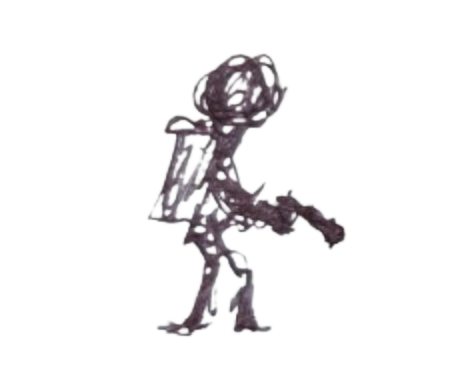
Every arcade game of 1985 seemed to be about saving the world. Paperboy was about getting the Daily Sun onto the right doorsteps before breakfast. It became one of the best-loved games of the decade, which says a lot about the idea, and about the strange, chaotic suburb Atari Games built around it.
Affiliate links: This article contains affiliate links, marked “(eBay)”. As an eBay Partner, PC Play may be compensated if you make a purchase, at no extra cost to you. It doesn’t affect what we write about. No sponsored content and no paid reviews.
| Developer and publisher | Atari Games (arcade) |
|---|---|
| Design | John Salwitz, Dave Ralston, Russel Dawe, Carl Bedard |
| Programming | John Salwitz |
| Art | Dave Ralston |
| Sound | Hal Canon, Earl Vickers |
| Hardware | Atari System 2 (its first game), hardware design by Doug Snyder |
| Arcade release | February 1985 (Europe), April 1985 (North America), October 1985 (Japan) |
| UK home release | ZX Spectrum, September 1986 (Elite Systems) |
| UK price | £7.95 (Spectrum cassette, 1986) |
| UK chart | No. 1 (Spectrum, September 1986; C64 version back to No. 1 in November) |
| Sales | No official arcade or home figures published |
A Kid, a Bike and an Overhead Projector
The idea came from Atari designer Dave Ralston. At an internal brainstorming session in February 1983, he pitched it on a single overhead projector transparency: a kid riding down a street, delivering papers. Programmer John Salwitz, who would lead the project with Ralston, has admitted he wasn’t keen at first. He would rather have made something like Missile Command or Asteroids. The pair had just worked on Akka Arrh, which was never released after a poor field test, and Salwitz thought his time at Atari might be up.
The first prototypes were stranger than the finished game, and focus groups didn’t take to them. As Salwitz later put it, “the reality we created was unreal.” The team pulled it back to an ordinary American street and kept only the best of the weirdness, the Grim Reaper included. Russel Dawe and Carl Bedard are credited on design alongside them, Doug Snyder designed the hardware, and Hal Canon and Earl Vickers did the sound.
Paperboy reached arcades in February 1985 in Europe and in April in North America. It was the first game on Atari’s new System 2 hardware, which ran at a higher resolution than the System 1 board behind Marble Madness. By December 1985 it was the top-grossing arcade conversion kit in the US.
Handlebars, Not a Joystick
The thing everyone remembers is the controller. Instead of a joystick, the cabinet had a pair of bicycle handlebars. Push forward to speed up, pull back to brake, and press the buttons on either side to throw. The team even adjusted the angle of the on-screen paperboy slightly, so the handlebars lined up with the fronts of the houses and aiming papers felt natural.
It’s a perfect example of what arcade games could do that home machines couldn’t. The controls told you what the game was about before you’d put a coin in.
Monday to Sunday, If You Last That Long
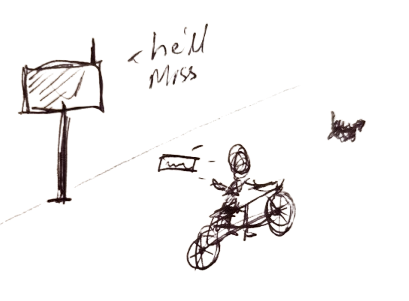
The structure was simple and brilliant. Each level is a day of the week, from Monday to Sunday, on one of three streets: Easy Street, Middle Road or the Hard Way. Some houses subscribe to the Daily Sun. Deliver to their porch or mailbox and they stay happy. Miss one, or put a paper through their window, and they cancel. The houses that don’t subscribe are fair game, and smashing their windows earns points.
That small choice, dutiful paperboy or suburban vandal, gave the game its personality. Meanwhile the street fights back with cars, skateboarders, rolling tyres and worse. Each day ends with a training course of ramps and targets. Lose all your subscribers, or all your lives, and it’s over.
What the Magazines Said
| Magazine | Issue | Reviewer | Version | Score |
|---|---|---|---|---|
| Sinclair User | #55, Oct 1986 | — | Spectrum | 5/5 |
| Crash | #33, Oct 1986 | — | Spectrum | 88% |
| C&VG | #60, Oct 1986 | — | Spectrum | C+VG Hit |
| Your Sinclair | #11, Nov 1986 | — | Spectrum | Megagame |
| ACE | #26, Nov 1989 | — | Spectrum (Encore budget re-release) | 5/5 |
| C&VG | #97, Dec 1989 | — | Spectrum (budget re-release) | 83% |
| Crash | #70, Nov 1989 | — | Spectrum (budget re-release) | 67% |
The C64 version did less well. One UK magazine gave it 52%, criticising the music and the “blocky” sprites, and scored the Spectrum version 83%. We’re still confirming which magazine that was, so it isn’t in the table.
Even the Crash reviewer who wasn’t keen on the arcade game admitted Elite had, as usual, done an excellent job of the conversion.
The British Angle: Number One on the Spectrum
For British players, Paperboy is as much a home computer game as an arcade one. Elite Systems, based in Aldridge in the West Midlands, brought it to the ZX Spectrum in September 1986, for £7.95. Steve Lamb and Tony Mack did the coding, and Rory Green the graphics and loading screen. It went straight to number one in the UK monthly chart, and the Commodore 64 version took it back to the top in November. Elite later advertised it as having spent more than a year in the Gallup chart.
Elite went on to release versions for the Amstrad CPC, BBC Micro, Acorn Electron, Commodore 16 and Plus/4. On budget, it came back on the Encore label in 1989 for £2.99. The home versions shared one obvious problem: no handlebars.
In the US, the NES version was developed by Eastridge Technology and published by Mindscape. Paperboy eventually appeared on almost everything, including the Master System, Mega Drive, Game Gear, Game Boy and Atari Lynx. A home-only sequel, Paperboy 2, followed in 1991, and a 3D reimagining on the Nintendo 64 in 1999.
How to Play It Today
The arcade original has turned up on Arcade’s Greatest Hits: The Atari Collection 2 (PlayStation, 1998), Midway’s Greatest Arcade Hits Volume 2 (Dreamcast, 2000) and Midway Arcade Treasures (PS2, Xbox and GameCube, 2003), and on Xbox Live Arcade in February 2007. There’s no simple modern digital re-release. That’s partly because of the tangled history of who owns Atari Games’ library, which we unpick in Looking Back: Atari. Original cartridges and tapes for the home versions are easy to find second-hand.
Paperboy for Spectrum (eBay) · Paperboy for C64 (eBay) · Midway Arcade Treasures (eBay)
Why It Still Matters
Paperboy proved that an arcade game didn’t need spaceships or martial artists to be thrilling. Its isometric street, its moral mischief and its daily routine gave it a rhythm few games of its era had. It remains one of the best-remembered games from Atari Games’ extraordinary run in the mid-1980s.
Looking Back is a monthly series revisiting games that mattered. For another Atari Games coin-op, read Looking Back: Marble Madness. Previous: Metal Slug (1996).
Sources
- Wikipedia: Paperboy, for credits, release dates and UK chart positions, checked against the sources below
- Thumbsticks: John Salwitz on the making of Paperboy
- Spectrum Computing: Paperboy, for Spectrum credits, price and reviews
- Crash #33 review (Crash Online)
- Arcade History: Paperboy, for the arcade staff list
- Exotica: Paperboy, for compilations
Paperboy and all related names and logos are trademarks of their respective owners and are used here for identification only. PC Play isn’t affiliated with or endorsed by Atari, Warner Bros. Games, Elite Systems or any other company mentioned. eBay is a trademark of eBay Inc.